How to Choose Between Korean Physical and Chemical Sunscreens for Your Skin?
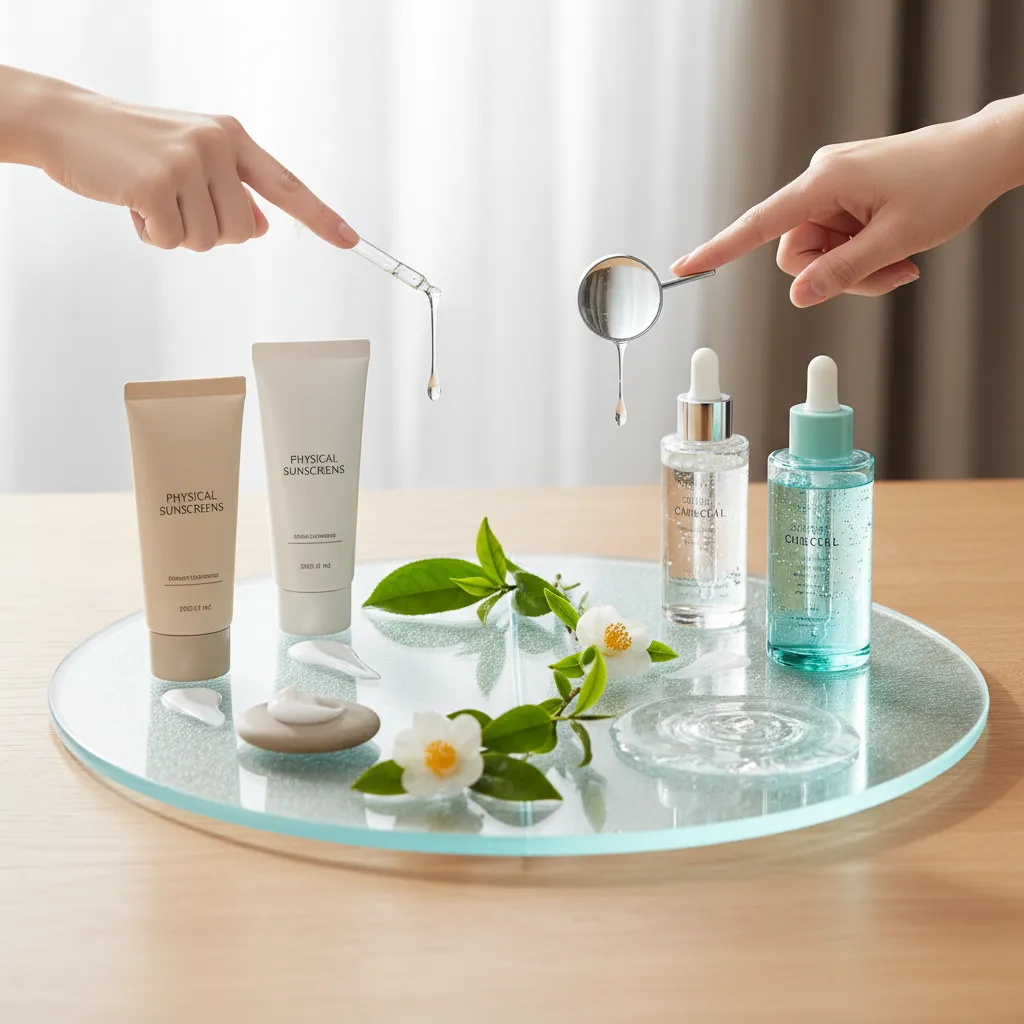
How to Choose Between Korean Physical and Chemical Sunscreens for Your Skin?
Confused by Korean sunscreens? Discover the essential differences between physical (mineral) and chemical filters, how they protect your skin, and which type is best suited for your unique skin concerns. Get ready for ultimate K-beauty UV protection! ☀️
Sunscreen is the non-negotiable, undisputed champion of Korean skincare. Seriously, ask any K-beauty expert, and they'll tell you that skipping SPF is like trying to build a beautiful house without a foundation. It’s the cornerstone of preventing premature aging, hyperpigmentation, and maintaining that coveted glass skin glow. But with so many incredible Korean sunscreens on the market, how do you choose the right one for you?
The biggest decision often boils down to two main types: physical (mineral) sunscreens and chemical (organic) sunscreens. Each has its unique strengths, formulas, and ideal skin types. Understanding the difference isn't just about science; it's about empowering you to make the best choice for your skin's health and appearance. Let's dive deep into the world of K-beauty product types for sun protection and find your perfect match!
Understanding Korean Sunscreens: The UV Protection Basics
Before we dissect physical and chemical sunscreens, let's quickly review the universal language of sun protection you’ll see on all Korean skincare products: SPF and PA.
What do SPF and PA mean?
- SPF (Sun Protection Factor): This number tells you how well a sunscreen protects against UVB rays, which are the primary cause of sunburn and skin cancer. An SPF 30 blocks about 97% of UVB rays, while SPF 50 blocks about 98%. Higher isn't always exponentially better, but it does offer slightly longer protection.
- PA (Protection Grade of UVA): This rating, often seen with plus signs (PA+, PA++, PA+++, PA++++), indicates protection against UVA rays. UVA rays penetrate deeper into the skin, contributing to premature aging, wrinkles, and dark spots. The more plus signs, the higher the UVA protection. In K-beauty, you'll almost always see PA++++, indicating excellent broad-spectrum protection.
Korean sunscreens are renowned for their innovative formulas that provide high SPF and PA ratings without the heavy, greasy feel of traditional sunscreens. They’ve truly revolutionized the daily sunscreen experience, making it a joy rather than a chore. This commitment to elegant formulations is a hallmark of K-beauty product types.
Dive into Physical (Mineral) Korean Sunscreens
Let’s start with the OG of sun protection: physical sunscreens. These are often recommended for those with sensitive skin due to their gentle nature.
What are Physical Sunscreens?
Also known as mineral sunscreens, these formulas use naturally occurring mineral filters to create a physical barrier on the skin's surface. The two main active ingredients you'll find are:
Zinc OxideTitanium Dioxide
How Do Physical Sunscreens Work?
Think of physical sunscreens as tiny mirrors on your skin. When UV rays hit your skin, these mineral particles literally reflect and scatter them away, preventing them from penetrating your skin. It's an immediate form of protection – once applied, you're good to go!
Benefits of Korean Physical Sunscreens
- Gentle on Sensitive Skin: Because they sit on top of the skin and aren't absorbed, mineral sunscreens are less likely to cause irritation, making them perfect for sensitive, reactive, or acne-prone skin.
- Immediate Protection: No waiting time! Apply and step out into the sun.
- Broad-Spectrum Protection: Both zinc oxide and titanium dioxide offer excellent protection against both UVA and UVB rays. Zinc oxide, in particular, provides superior UVA protection.
- Less Likely to Clog Pores: Many Korean physical sunscreens are formulated to be non-comedogenic, which is great news for those struggling with breakouts.
- Good for Post-Procedure Skin: Dermatologists often recommend mineral sunscreens after treatments like peels or lasers because of their gentle nature.
Potential Drawbacks & K-Beauty Innovations
Historically, physical sunscreens had a reputation for leaving a noticeable white cast, especially on deeper skin tones, and feeling thick or difficult to spread. This "ghosting" effect was a major turn-off for many.
However, Korean skincare brands have made incredible strides in overcoming these issues! They utilize:
- Micronized Zinc Oxide and Titanium Dioxide: These are milled into extremely fine particles, which significantly reduces the white cast and improves spreadability without compromising efficacy.
- Tinted Formulas: Many Korean physical sunscreens now come with a subtle tint that helps to neutralize any white cast and can even out skin tone, offering a light "tone-up" effect.
- Hybrid Formulas: We'll touch on these later, but many K-beauty sunscreens blend mineral and chemical filters to get the best of both worlds.
- Lighter Textures: Modern K-beauty mineral sunscreens are surprisingly lightweight, often feeling like a moisturizer or even a serum.
💡 Ready to discover amazing Korean skincare? Subscribe to Bomibox and get curated K-beauty products delivered monthly.
Explore Chemical (Organic) Korean Sunscreens
Now, let's turn our attention to the other side of the coin: chemical sunscreens. These are often praised for their cosmetically elegant finishes.
What are Chemical Sunscreens?
Chemical sunscreens, also known as organic sunscreens (though they are laboratory-synthesized, "organic" refers to their carbon-based molecular structure), use various compounds that absorb into the skin. Common filters include:
AvobenzoneOxybenzone(less common in newer K-beauty formulas due to environmental and skin concerns)OctinoxateOctisalate- New-generation filters: Tinosorb S, Tinosorb M, Uvinul A Plus, Mexoryl SX/XL (these are often found in advanced Korean sunscreens and are celebrated for their stability and broad-spectrum protection with less irritation potential).
How Do Chemical Sunscreens Work?
Unlike physical blockers, chemical sunscreens work by absorbing UV radiation as it penetrates the skin. They then convert these UV rays into a small amount of heat, which is released from the skin. They act like a sponge, soaking up the harmful rays.
Benefits of Korean Chemical Sunscreens
- No White Cast: This is the biggest selling point for many! Chemical sunscreens typically blend seamlessly into all skin tones, leaving no trace. They are perfect for achieving that clear, radiant glass skin look.
- Lightweight & Cosmetically Elegant: They often have thinner, more fluid textures, making them feel less noticeable on the skin and easier to layer under makeup. Many feel like a light serum or essence.
- Easier to Spread: Their smooth consistency allows for effortless application, even over larger areas.
- Great for Daily Wear: Because of their elegant feel, they are often preferred for everyday use, especially in humid climates or for those who wear makeup.
Potential Drawbacks & K-Beauty Advancements
In the past, some older chemical filters (like Oxybenzone) raised concerns about potential irritation for sensitive skin, hormonal disruption, and environmental impact (coral reef bleaching). They also require about 15-20 minutes to fully activate on the skin before sun exposure.
However, Korean skincare brands are at the forefront of developing new-generation chemical sunscreens that address these concerns:
- Advanced UV Filters: Many Korean sunscreens now feature newer, photostable UV filters (like Tinosorb and Uvinul) that offer superior protection, are less likely to cause irritation, and have better safety profiles.
- Hydrating Formulas: Packed with humectants like hyaluronic acid and glycerin, many K-beauty chemical sunscreens double as hydrating essences or moisturizers, perfect for dry skin.
- Soothing Ingredients: Formulations often include calming ingredients like centella asiatica (Cica), green tea, or mugwort to counteract any potential irritation and benefit sensitive skin.
- Water-Resistant Options: For active lifestyles,
Finding the right products for your skin can be overwhelming, especially with the vast array of options available in Korean skincare. This is where Bomibox can make your journey easier and more enjoyable. Bomibox is a subscription service that curates a selection of high-quality Korean skincare products tailored to your skin's needs. Each box includes a variety of items, such as cleansers, toners, serums, masks, and moisturizers, allowing you to discover and experience the best of K-beauty. By subscribing to Bomibox, you receive expertly chosen products that help you build a comprehensive and effective skincare routine, ensuring you achieve the clear, glowing skin you desire.

Related Articles
- What Is Propolis In Korean Skincare How Does It Benefit Your Skin
- Bomibox Spring Bloom April 2025
- Bomibox Season Of Glow August 2025
- How Does Vt Reedle Shot Work
- Glow Up Hydrate Soothe And Brighten Your Skin 2024
- Acne And Korean Skincare
- How To Soothe Sensitive Skin Your K Beauty Guide For Calm Comfort
- Bomibox Summer Calm May 2025
- Layering Like A Pro Your Ultimate Guide To Korean Skincare Product Order
- Complete Korean Skincare Routine Guide For Beginners
Last updated: January 20, 2026
Reviewed by: Bomibox Team